Driveways, decks, patios, walkways and siding restored across the City and District of North Vancouver by an insured North Shore crew.
North Vancouver is genuinely, measurably wet. Under Environment and Climate Change Canada’s 1981–2010 Canadian Climate Normals, the North Vancouver Wharves station down at the waterfront records 1,724.8 mm of precipitation a year across 181 days with measurable precipitation. Move uphill and it climbs sharply: the Sonora Drive station in North Vancouver normals out at 2,355.6 mm a year, close to double Vancouver International Airport’s 1,189.0 mm. The mountains squeeze the rain out of the air right on top of you.
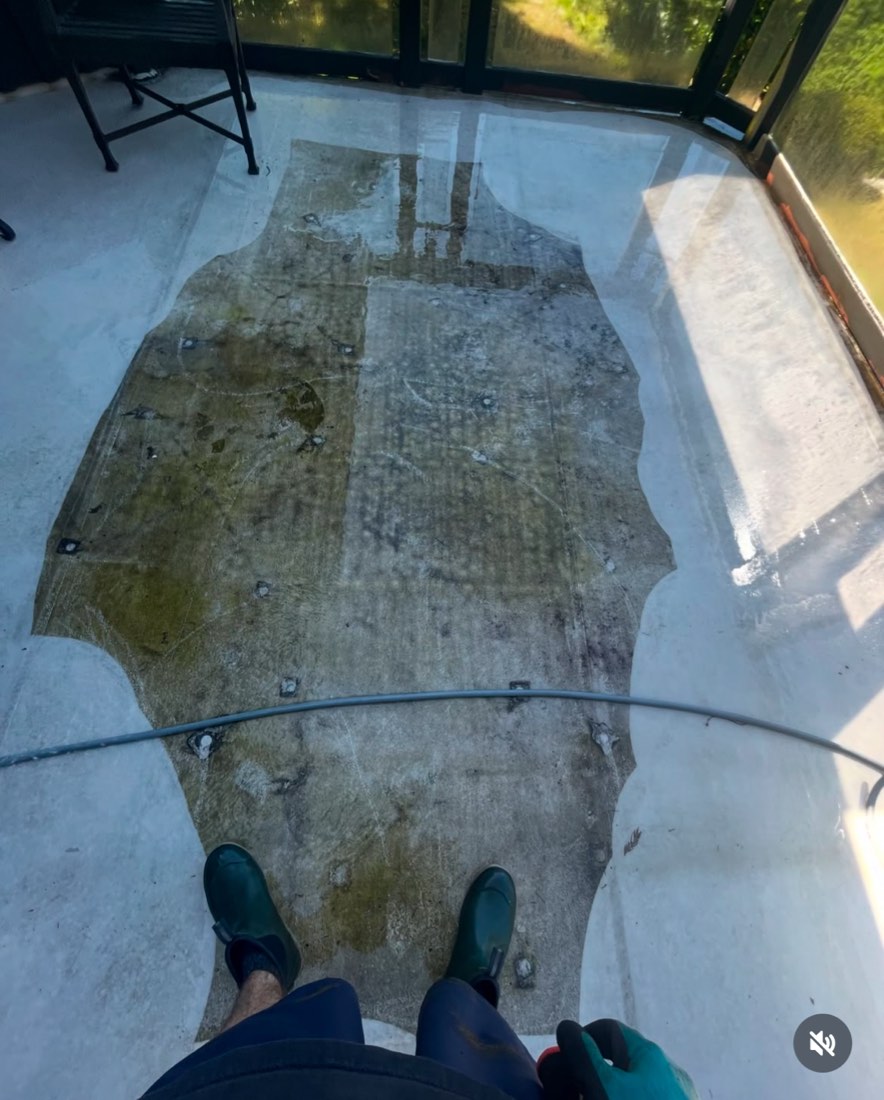
That is not an accident of geography you can ignore. Two of the three watersheds Metro Vancouver draws its drinking water from, Capilano and Seymour, sit directly above North Vancouver for exactly this reason. What is excellent for a reservoir is excellent for moss, algae and lichen, and they will happily colonise concrete, exposed aggregate, pavers, stone, cedar decking and north-facing siding.
Terrain then decides what the job looks like. Lower and Central Lonsdale properties in the City of North Vancouver are typically tighter lots, older concrete, laneways and shared walkways. Up in the District, Lynn Valley, Edgemont Village, Blueridge and Deep Cove bring steep driveways, big cedar decks, retaining walls and heavy tree cover, which means more organic growth and more thought about where the runoff goes.
Get a free estimate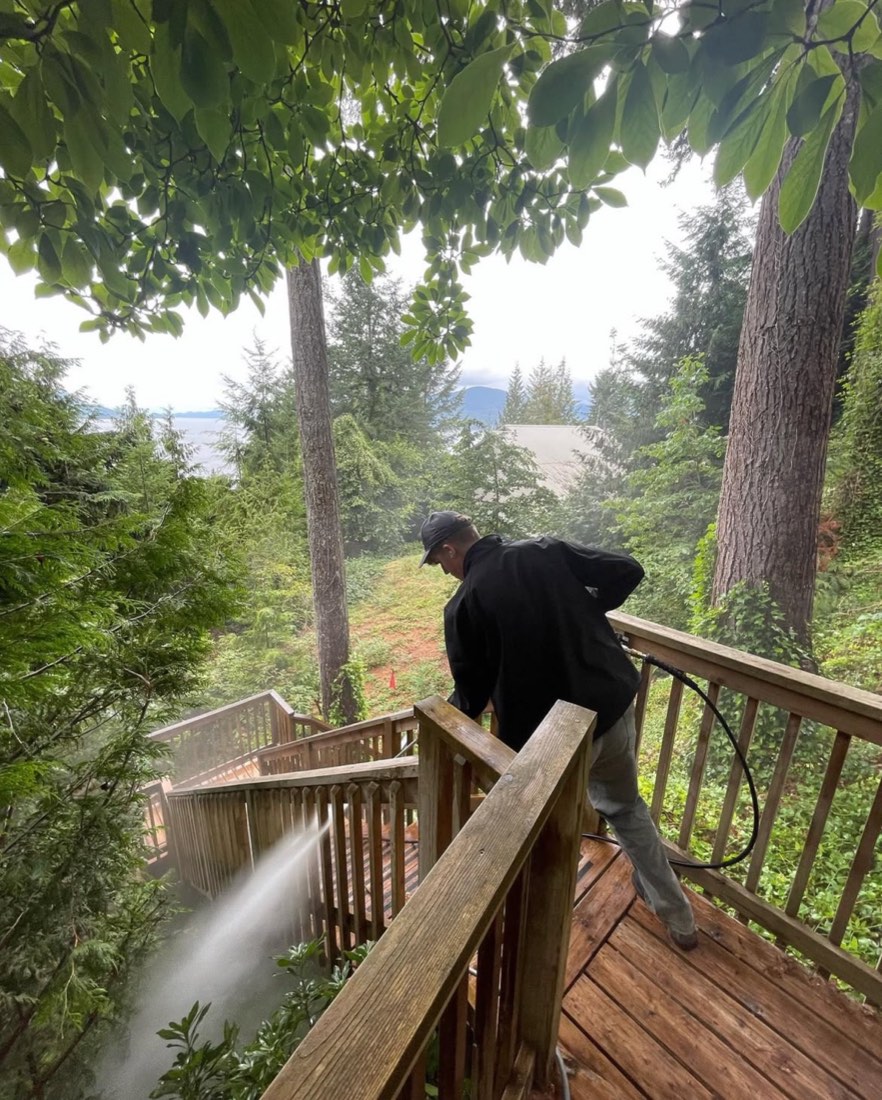
North Vancouver is two separate local governments, the City of North Vancouver and the District of North Vancouver, and homeowners are often surprised by which one they are in. Bylaws, permits and collection schedules differ. Outdoor water use, however, does not: both are member jurisdictions of Metro Vancouver and both follow the same regional plan.
That plan is Metro Vancouver’s Drinking Water Conservation Plan. Stage 1 comes into effect automatically each year from 1 May to 15 October. From Stage 2 onward it restricts “washing impermeable surfaces”: prohibited “except if for a health or safety reason, preparing a surface for painting or similar treatment, or aesthetic cleaning by a commercial cleaning operation.” That last clause matters, because at Stage 2 the exemption for a commercial cleaning operation is still there when a homeowner’s own pressure washer is not.
At Stage 3 the aesthetic exemption is removed and only health-and-safety cleaning or preparing a surface for painting by a commercial operation is permitted. At Stage 4 it is prohibited except when ordered by a regulatory authority for a health or safety reason. Metro Vancouver publishes the current stage on its water restrictions page; as of August 2026, Stage 2 has been in force region-wide since 16 July 2026. We check it before every booking.
Get a free estimateMatching pressure to surface is the whole job. Get it wrong and you strip granules off a roof or stripe a driveway permanently.
Surface type, slope, drainage, water access and anything fragile nearby, plus a check of the water stage currently in effect so there are no surprises.
Low pressure and a cleaning solution rather than force. The Asphalt Roofing Manufacturers Association states plainly that you should never use a pressure washer on an asphalt shingle roof, because it causes granule loss and very likely premature failure of the roof system.
Driveways, walkways, patios and pool decks get a rotating surface cleaner for an even finish, instead of the wand arcs you can still see three years later.
On District hillside lots we plan the runoff before we start so it does not sheet through planting beds or onto a neighbour below, then rinse down and put everything back.
We work both North Vancouver municipalities, from Lower Lonsdale up to Lynn Valley and out to Deep Cove.
In most cases yes. Metro Vancouver’s Drinking Water Conservation Plan prohibits washing impermeable surfaces at Stage 2 “except if for a health or safety reason, preparing a surface for painting or similar treatment, or aesthetic cleaning by a commercial cleaning operation”. We are a commercial cleaning operation. At Stage 3 the aesthetic exemption is removed and the work is limited to health, safety or paint preparation. We confirm the stage in effect for your booking date.
Yes. Both, plus West Vancouver, Lions Bay and the rest of the North Shore. The two North Vancouver municipalities are separate local governments but they share the same regional water rules, so the process is identical either side of the boundary.
Not everywhere, which is why we do not use it everywhere. Cedar decking, painted siding and roofs get a low-pressure soft wash. Concrete, aggregate and stone can take a surface cleaner. We decide surface by surface, not job by job.
Some regrowth is inevitable on a slope that sees 181 days of precipitation a year, but a proper clean removes the root layer rather than just the green on top, so it comes back far more slowly than after a rinse with a hose. Shaded, north-facing surfaces under conifers will always need attention sooner than open sunny ones.
In the North Vancouver market this work is typically quoted on the surface area involved, the number of storeys and how difficult the property is to access, rather than by the hour. Steep driveways, long hose runs and heavy moss all move the number. Call 236-984-0598 for a real, no-obligation quote on your address.
Yes. RipTide Exterior Cleaning is fully insured with WorkSafeBC coverage in good standing, and holds an A+ rating from the Better Business Bureau.
Send us the address and what needs cleaning. We will confirm the current water stage and come back with a clear, no-obligation quote.